
Summer Workshops!
Plus recent canvassing highlights + bonus resources

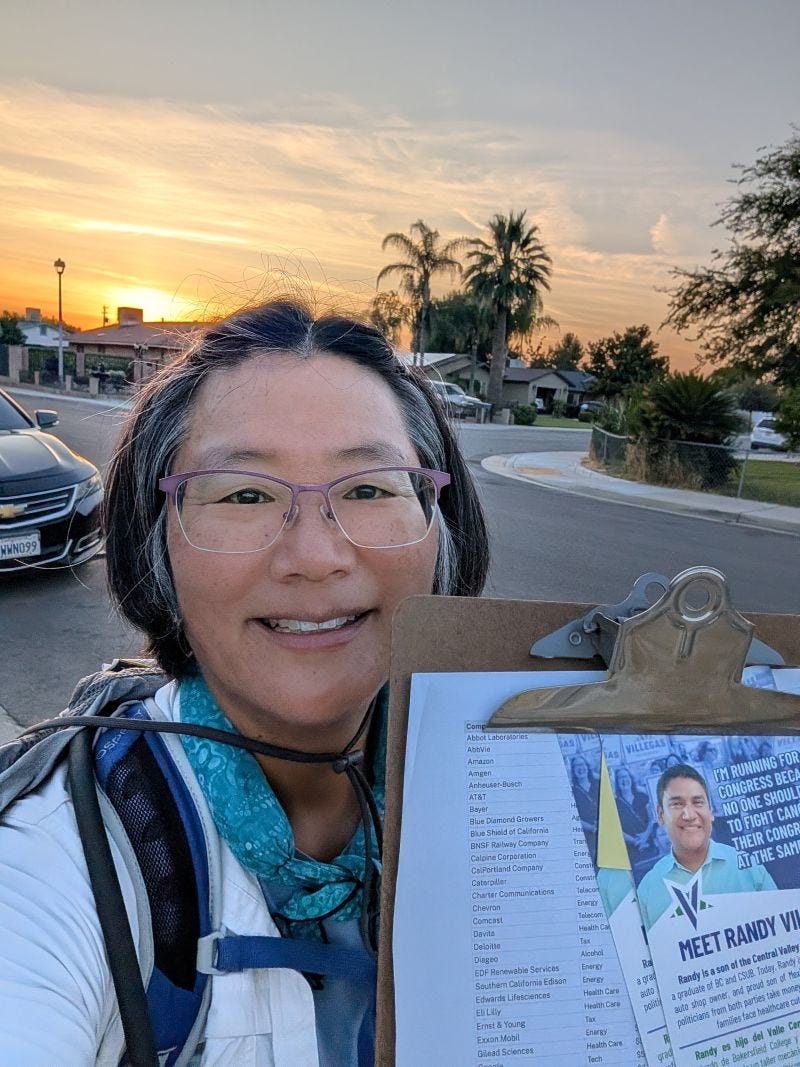
Happy Summer! It’s hard to believe we have just 19 weeks left until the general election (and about 15 weeks until early voting for the midterms begins – gulp!). So now is a great time to canvass and phone bank – and to build your skills before the big push this fall. I’m super excited about two upcoming online workshops – please come, and spread the word!
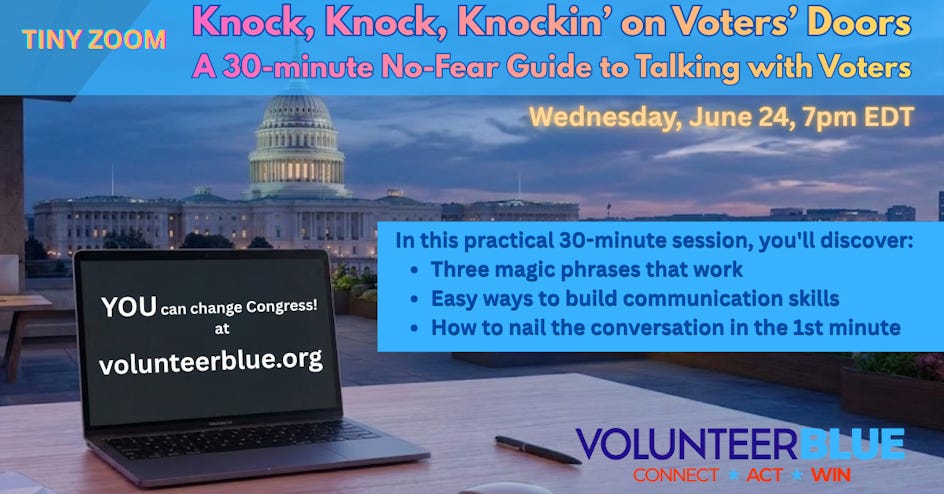
Intro to Canvassing
Wednesday, June 24: 4 pm Pacific/7 pm Eastern
In this 30-minute “No-Fear Guide to Talking with Voters,” my dear friend Carol Blaney and I will demystify canvassing. We’ll demonstrate how to have fulfilling (not fearful) contacts with voters, share Three Magic Phrases to transform any conversation, and explain why door-knocking – and listening – can change Congress. Sign up here.
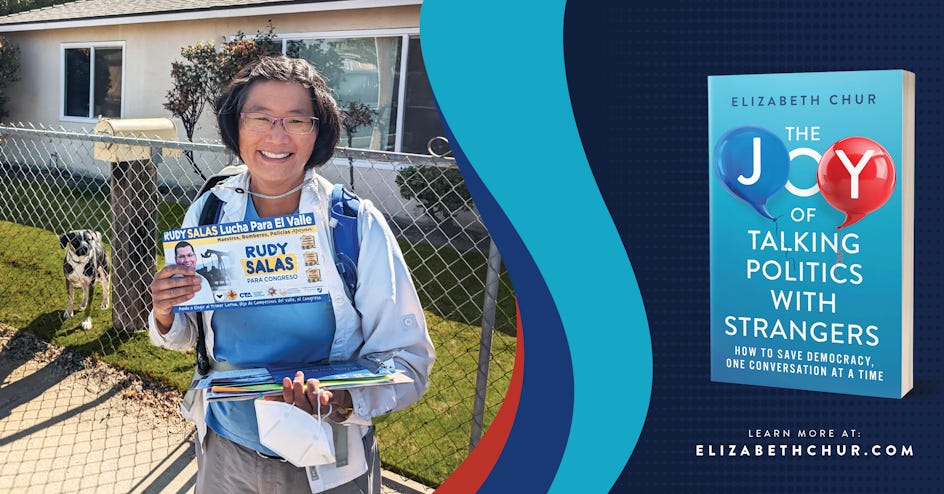
Turn ‘I Don’t Vote’ into the Start (not the End) of a Conversation
Wednesday, July 8: 5 pm Pacific/8 pm Eastern
More than one in three eligible voters skipped the 2024 elections – and many actually agree with Democratic priorities! If even a small fraction vote in the midterms, they can move our country in a better direction. In this interactive 75-minute workshop, I’ll demonstrates how to use curiosity and empathy to successfully engage with them. Whether you’re a seasoned canvasser or phone banker or a brand-new volunteer, this workshop will give you strategies for transforming “I don’t vote” into “I’ll vote, and bring my whole family to the polls, too!” Sign up here.
The Magic of Canvassing
I had some fabulous experiences canvassing in and around Bakersfield, Calif., this month leading up to California’s primary elections. I was knocking doors for Randy Villegas, one of three Congressional candidates for California’s 22nd Congressional district (CA-22). The son of Mexican immigrants, he’s a young, dynamic college professor, school board trustee, and auto repair shop co-owner. Villegas is fighting to protect health care and improve the lives of working people. The incumbent, Republican Congressman David Valadao, voted last year to cut Medicaid funding – a decision that will affect two out of every three residents in this district.
This is the most competitive Congressional race in California this year, and it’s gotten national and international coverage in numerous media outlets, including KQED’s Political Breakdown, the New York Times, and the Guardian.
One voter I talk with, Beatrice, had never heard of Randy, but when I told her about his campaign, she was all in. When I asked when she planned to vote, she said it depended on when she could get a ride on Election Day. I said, “Do you need a ride? We’d be happy to give you one!” She looked amazed, and said, “I didn’t know they provided rides to the polls!” I said that I or another volunteer could give her a lift, and we made an appointment.
She also asked me for some additional flyers for Randy Villegas so she could share them with her extended family members. I asked, “How many flyers do you want?” Beatrice said, “Could I get five?” I said, “Absolutely!” So this one conversation could have led to six people hearing about Randy Villegas and supporting him in the primary.
Another volunteer gave Beatrice a ride on Election Day, and said that Beatrice had some health issues that made it difficult to walk. Beatrice told her that she hadn’t voted in the last election because she wasn’t able to get to the polls. This was just one example of how just knocking on someone’s door and having a conversation can earn their support and help them overcome barriers to voting.
If you’ve never canvassed before, or know someone who wants to do more but isn’t sure how, our intro to canvassing Zoom workshop this Wednesday, June 24, is a great way to find out more!
‘I’m Not Voting’ to ‘10 out of 10’
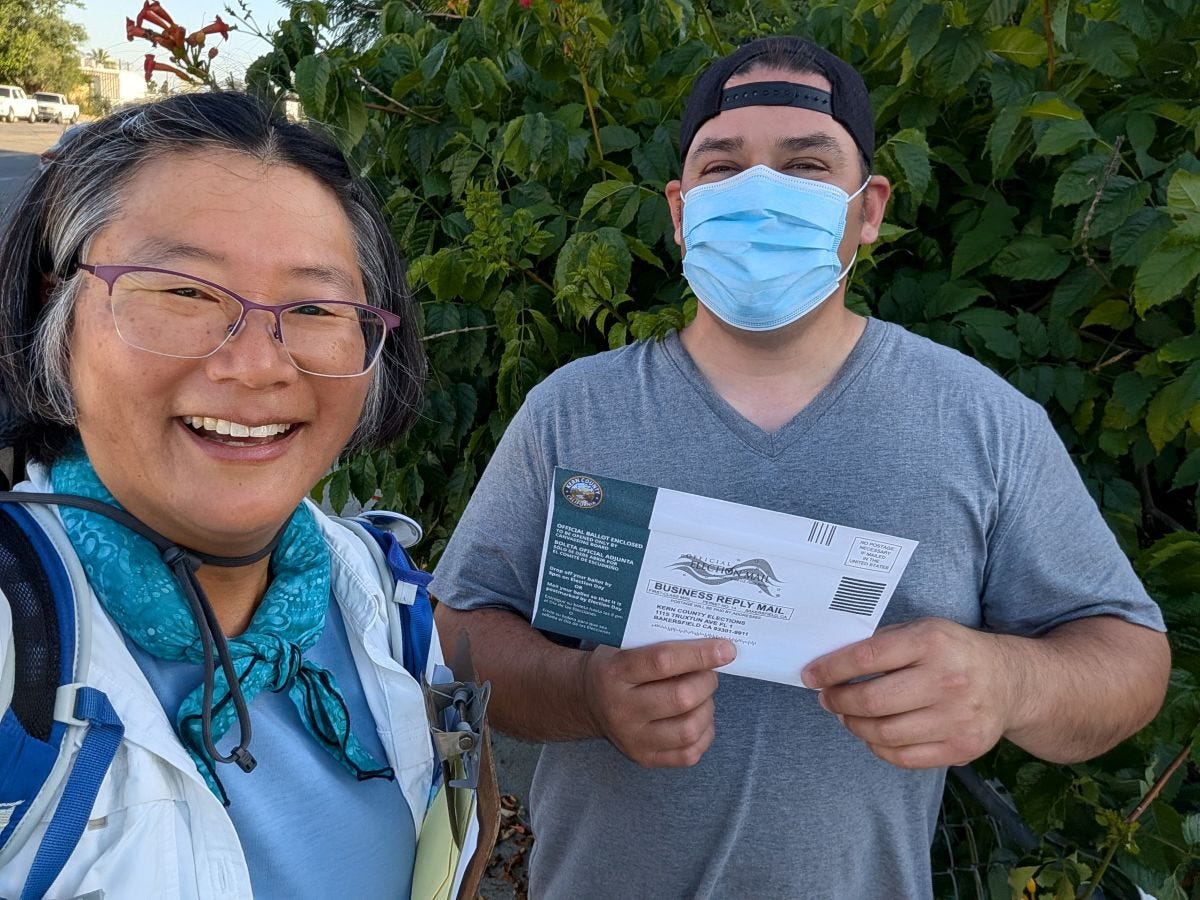
I talked with another voter, Guillermo, who wasn’t planning to vote. He sounded discouraged, and kept talking about how Democrats were outnumbered and there was no point – the Republicans would always win. He’d thrown his ballot away, because he’d already decided he wasn’t voting.
I asked him what he did for work, and he talked about working at a minimum wage job for an employer that bent the overtime rules, and co-workers who’d been with the company for decades who barely made more than he did. He talked about how the people in power were so smart, and found ways to manipulate the system and take advantage of workers. He said even though he worked full-time, he and many of his co-workers couldn’t even afford their own car – they had to carpool with others.
I said, “I hear what you’re saying. That’s actually part of why I’m out here volunteering to talk with voters like you. Randy Villegas wants to raise the minimum wage so hardworking people like you can make a decent living. He’s fighting for ordinary people, not rich people or big corporations. He’s actually refused to take a single dollar from corporate donors, because you know how that works – if you get elected, those big donors expect favors in return. This election could be really close – a couple years ago I volunteered for another Democratic candidate in the Central Valley, and that guy ended up winning his race by just 187 votes! So your vote could decide who will represent the community in Congress. Given what we talked about, I’m wondering – on a scale of 0 to 10, how likely are you to vote for Randy Villegas on Tuesday?”
Guillermo surprised me by saying, “Oh, I’m a 10 out of 10.” Wow! That’s about as far as you can get from “I’m not voting.”
That was a great conversation, but I was interested in outcomes. I have a new Election Day tradition: I go back to houses where I had a juicy conversation in the days and weeks leading up to the election, to see what the voter decided to do. This time around, some people weren’t home, but I managed to connect with Guillermo again. He emerged from the house holding his ballot. Somehow he had fished it out of the trash, filled it out, and signed and dated it. I was so impressed! But he said he wasn’t sure he’d have time to drop it off at the polling place before it closed at 8 p.m.
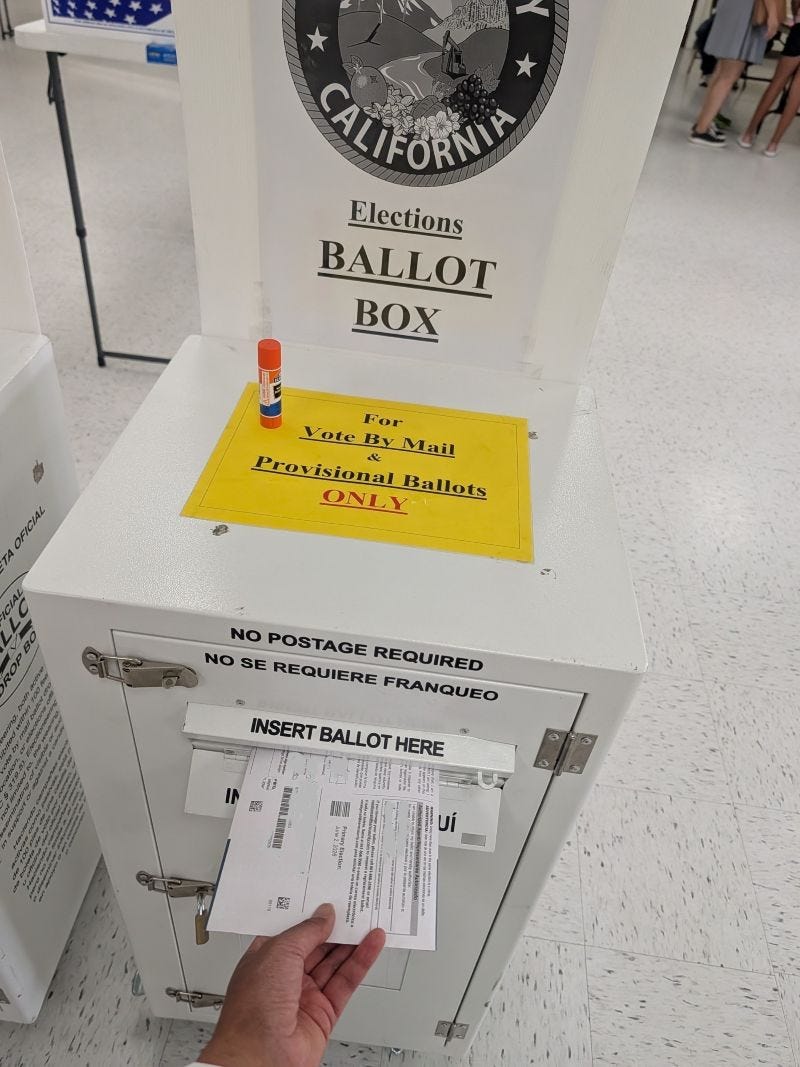
In California, with the voter’s permission it’s legal to bring someone else’s ballot to a polling place or dropbox, so I offered to drop it off for him. He said, “Oh, that would be great – I was actually hoping you’d come back so I could give it to you.” So I brought it to the polling place and dropped it in the ballot box about an hour before the doors closed – what an exhilarating feeling! That alone was worth the whole trip down to CA-22!
If you’d like to learn more about how to accompany a voter from “I don’t vote” into “I’m a 10 out of 10,” sign up here for our online workshop on Wednesday, July 8!
Part of a Longer Conversation
One other deeply moving interchange happened at the door of a voter I’ll call “James.” He was a stately African American elder who grew up in the area and worked in the fields in the 1960s before moving to the Deep South. He had also served in Vietnam for several years, but was so disillusioned by that experience that he refused to celebrate Veterans Day for many years. He’d recently moved back to town, and said he would not be voting in the primaries because he was still getting his bearings and catching up on the local context. However, he said he was disturbed the direction the country was headed, and there were so many things he would change he wouldn’t even have time to list them all.
I told him about Randy Villegas’s campaign and everything he stood for. James politely but firmly said that this would be the first time in 40 years he wasn’t voting. “I don’t want to just make a mark on a piece of paper – I want to feel connected to the person, to know what I’m voting for,” he said. I asked what, if anything, might inspire him to change his mind. “If I could sit down with the candidate, ask them questions, and really get to know them – then I’d feel confident voting for them,” he said. Since the election was happening the next day, that wasn’t possible. I said that although I was disappointed, I respected his decision – that I knew that he was the captain of his own ship, and needed to make a decision that was in line with his values.
Then I asked about the other two voters in his household. James said his father-in-law had already voted, but that they didn’t talk about politics. He said his wife, who I’ll call “Janice,” was busy making dinner. I asked if I could speak with her. He went inside, and I could hear her saying how busy she was trying to get dinner on the table – but she agreed to join her husband at the door.
I apologized profusely for barging in at a busy time. Janice was polite and asked what this was about. I briefly recapped what I’d shared with her husband, and then I mentioned how impressed I was that Randy Villegas had decided not to take a single dollar in campaign donations from corporations, while the other two candidates had taken tens of thousands of dollars from companies like Amazon, Google, and Exxon.
I said, “Even though Randy isn’t taking corporate donations, he still has to raise money to run a campaign – so he’s been going to house parties where people invite their friends and family members, and they sit down in the host’s living room like James was talking about, so Randy can share his story and talk about how he’s fighting for working people. Randy had one gathering in a small town, and while normally the host asks people to donate $100 or $500, the organizers knew that these farmworkers would never be able to give that much. So they asked people to donate one dollar. At the end of the event, 10 people lined up, each with a crumpled one dollar bill in their hand. At the end of the event, Randy had raised a total of $10 – but to him, it felt as if he had raised $10,000, because he knew how hard each person had worked for that dollar they donated to his campaign. They believed in him and trusted that he would fight to improve the lives of their families and the community. That’s the kind of campaign he is running, and that’s the kind of representative he would be if he’s elected.”
As I told this story, my voice began to break, and tears started rushing down my cheeks. I said, “I’m so sorry – I don’t usually get this emotional, but it’s been a long day, and there’s so much at stake in this election, and so much that needs fixing in our country. We need leaders like this who are running for the right reasons. But we’re up against a lot, so we need everyone’s support to win.”
James and Janice didn’t scold me or shoo me away. They stood there, listening and nodding as I wiped the tears from my face, James gently rubbing his wife’s elbow. I thanked them for their time and for listening, and shook their hands. James said, “Well, I don’t know this Randy fellow, but if he’s as well-intentioned as the people he has out knocking doors for him, he’s probably a good person.” I said, “I’m honored by that comment, and I’m doing my best to be a good representative of him and his campaign.” As we said goodbye, James said that although he wouldn’t be voting in the primary, he would definitely be voting in November.
James, Janice and I shared an experience I’ll never forget. It was a true gift to hear their stories, and humbling that they would so generously witness mine. And it was a reminder that often, canvassing is part of a longer-term dialogue that happens over many months and years, between a vast team of volunteers and millions of voters across this country. It’s so important to encourage multitudes of other volunteers to join us in the field, so we can nurture those connections over the long haul. Someone needs to knock on James and Janice’s door – and the doors of so many others like them – in the coming months and years. We need to continue these dialogues to help rebuild our precious, fragile democracy. Will you join me in this effort?
For Your Listening Pleasure
Finally, a few resources for those who appreciate context for your voter engagement efforts (or want some good things to listen to as you drive to your next canvass!) For those of you interested in the CA-22 Congressional race, I highly recommend listening to Flor Olvera’s interview with Villegas on her podcast, Flor Unmuted. This in-depth, heartfelt interview gave me greater insight into his backstory and campaign.
If you’re canvassing for Villegas anywhere south of Delano, you’ll likely also be knocking doors for voters in California State Assembly District 35, in which case you might want to also check out Flor’s interview with Democratic candidate Andrae Gonzales.
I met Flor in 2024 when I was canvassing in the Bakersfield area, and she was a dynamic candidate for Kern College Community College District. She’s been active in Democratic politics for years, and is someone to watch in her own right. You can check out her Substack here.
And if you’ve ever wondered, “How can people vote/think/feel like that?!” some of the most helpful answers for me have come through two books by UC Berkeley sociologist and professor emerita Arlie Russell Hochschild: Strangers in their Own Land: Anger and Mourning on the American Right, and Stolen Pride: Loss, Shame, and the Rise of the Right.
Hochschild spent years researching, interviewing, and writing about the lived experiences of conservatives in Louisiana and Kentucky, and brings curiosity and deep compassion to her work. You can listen to an interesting Grassroots Connector interview that host Martha Merson conducted last month with Hochschild on the show, “It Needs to Be Said” (start listening around 4:00).
Thank you for all you do!
With gratitude,
Elizabeth Chur